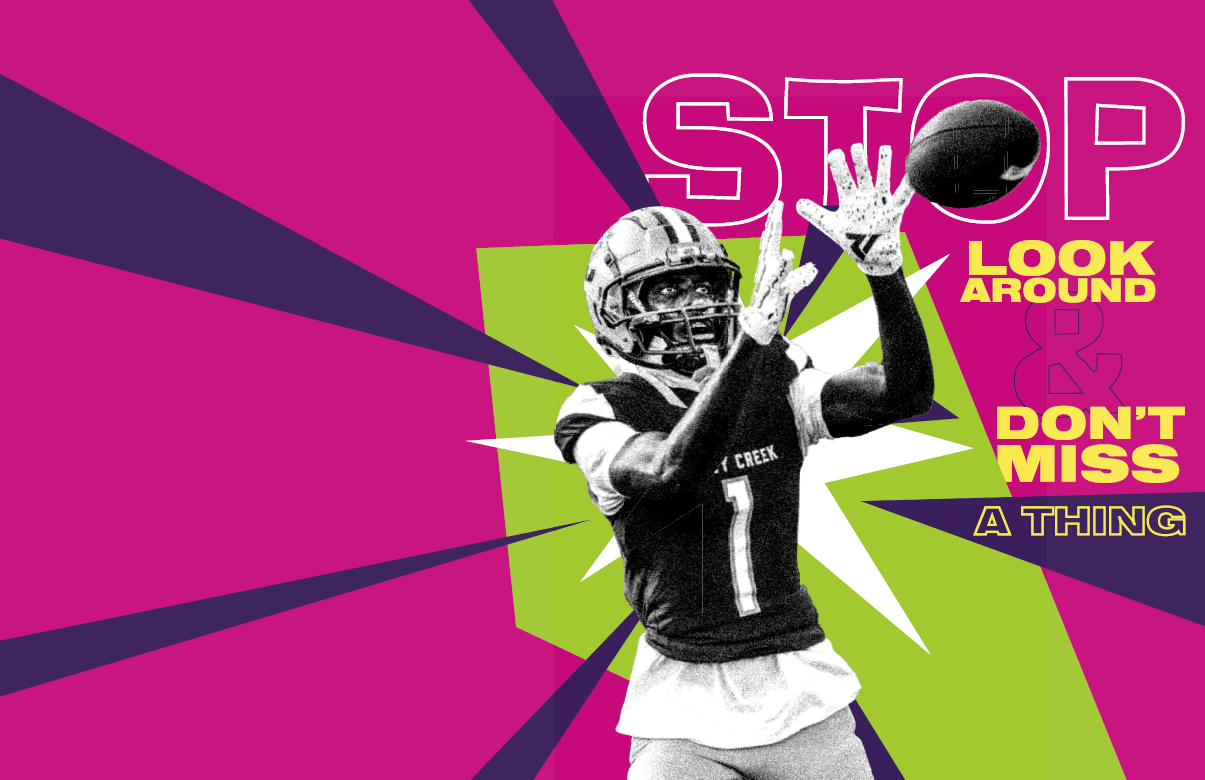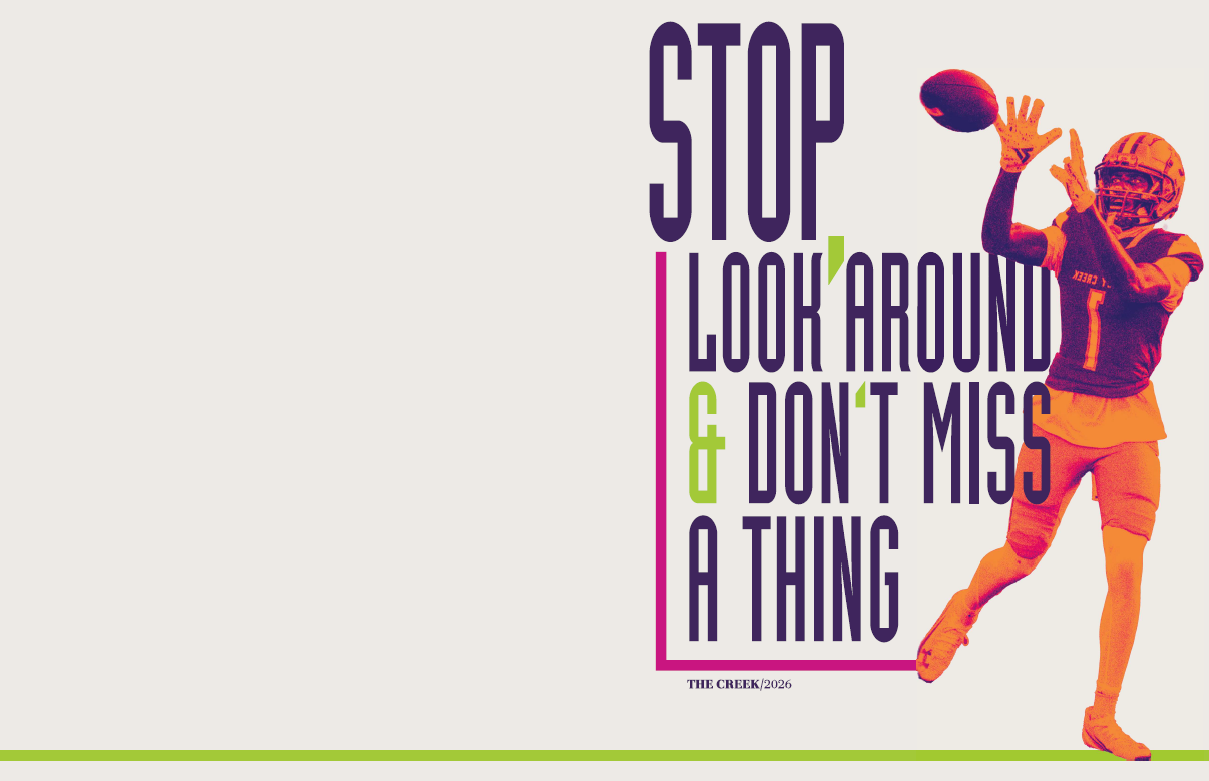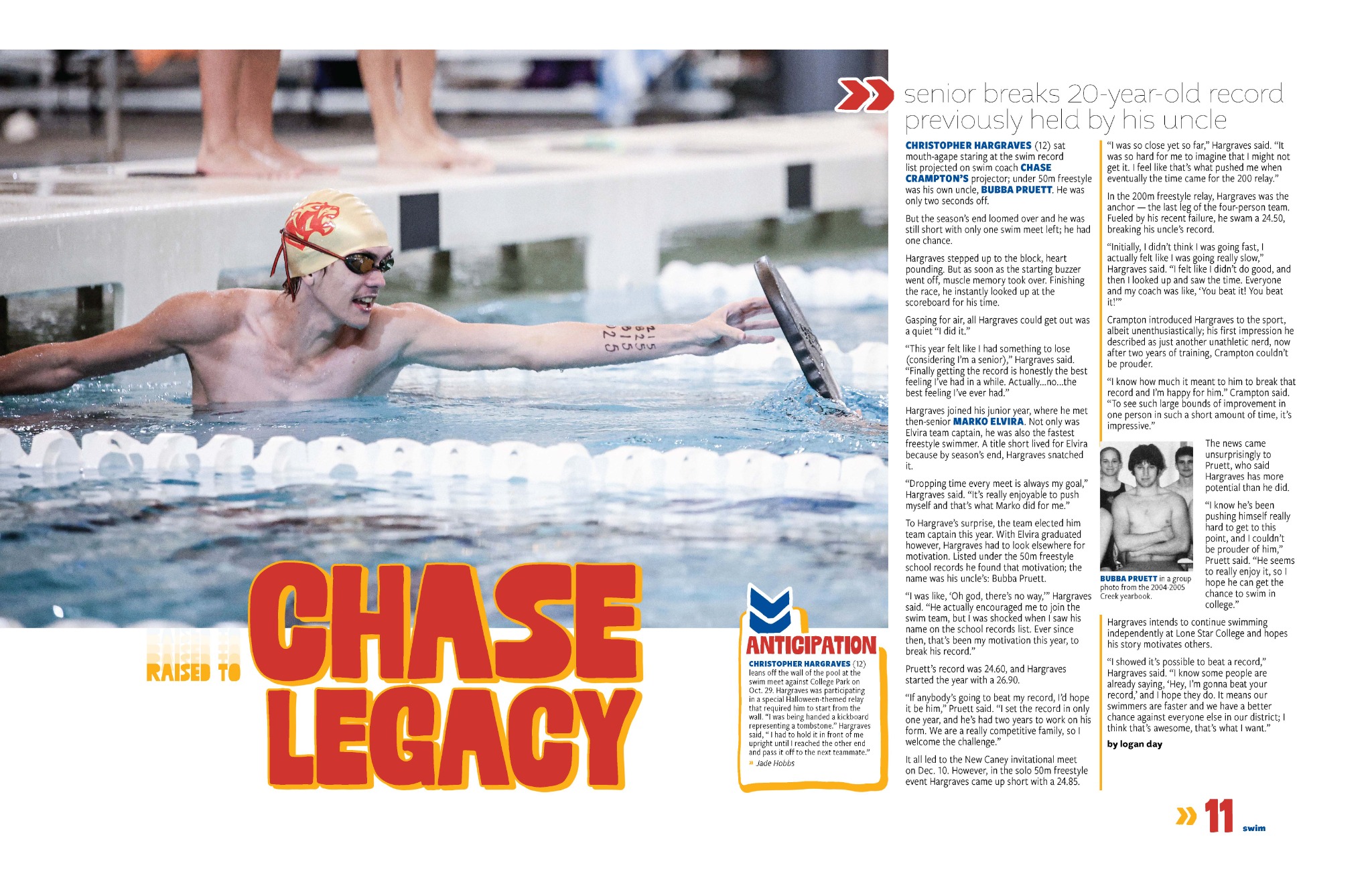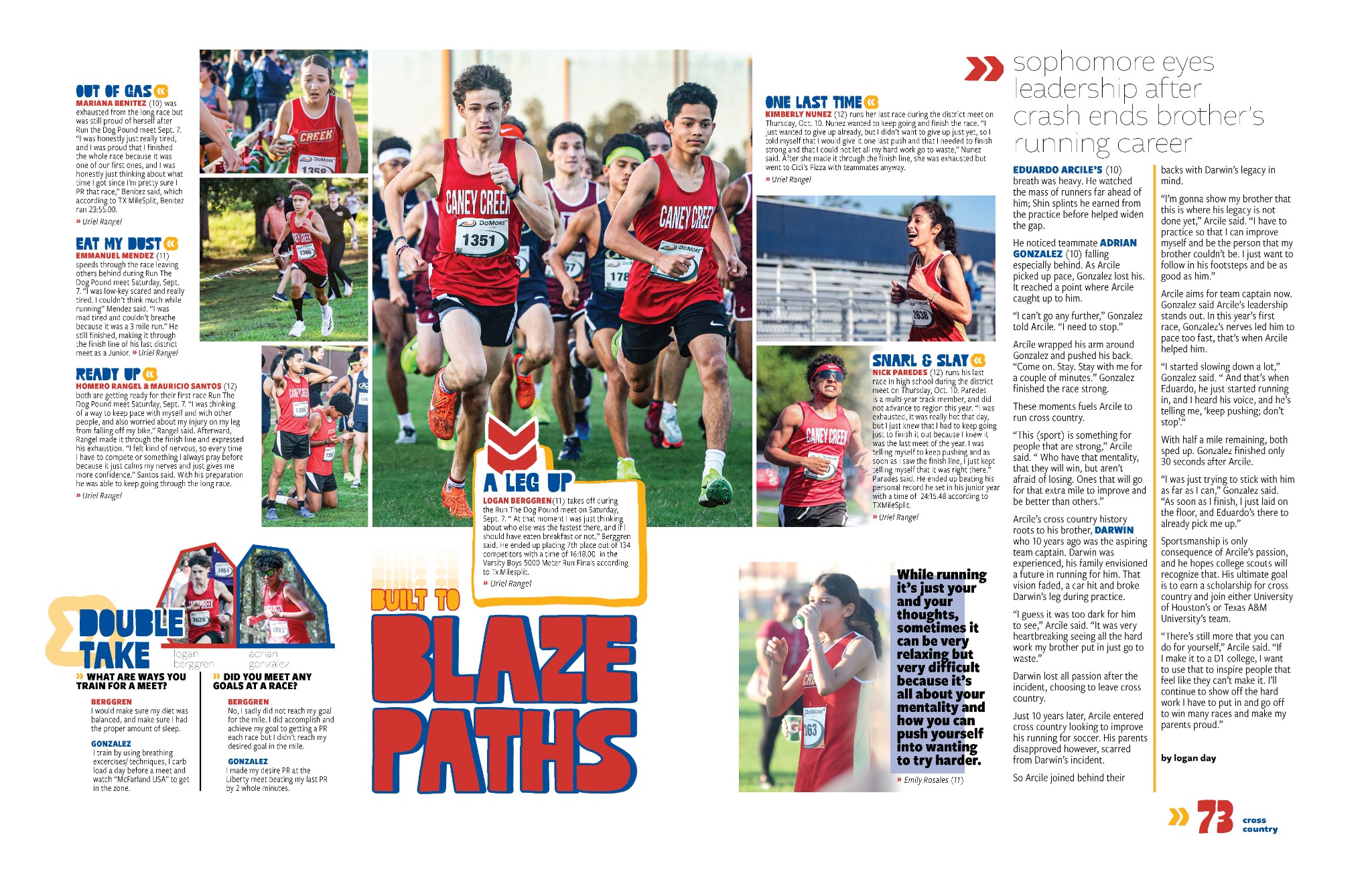
as ILPC Director Alyssa Boehringer said during a workshop presentation: Contrast, Repetition, Alignment and Proximity.
That CRAP directs and feeds the eyes, making it just as important as the rest of the crap on the page. Design is journalism, using shapes, text, white space and color to enhance the story's meaning rather than purely pushing visual appeal.
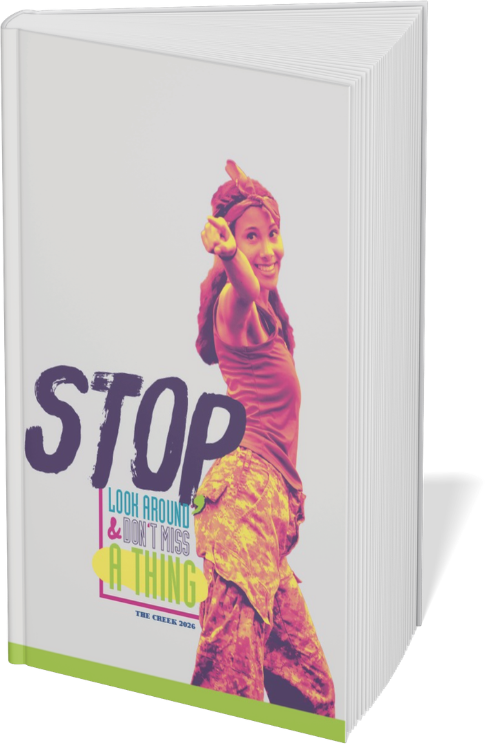
Every detail in designs should be intentional. Before I get behind a computer for yearbook spreads, the design team and I completely flesh out the yearbook theme's concept and verbal elements.
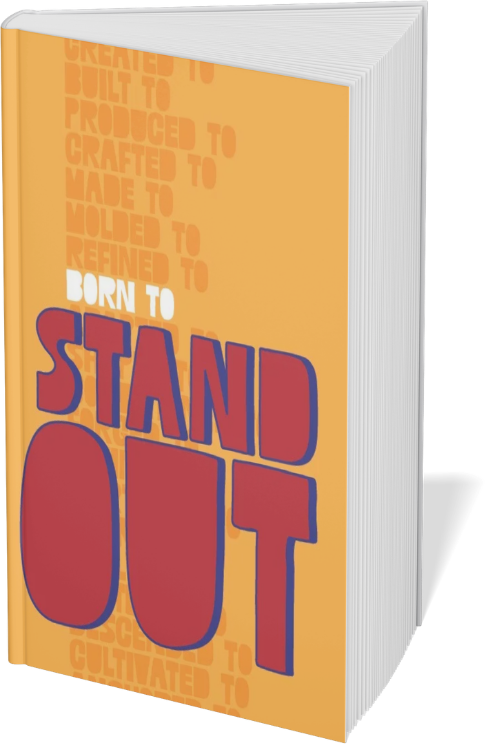
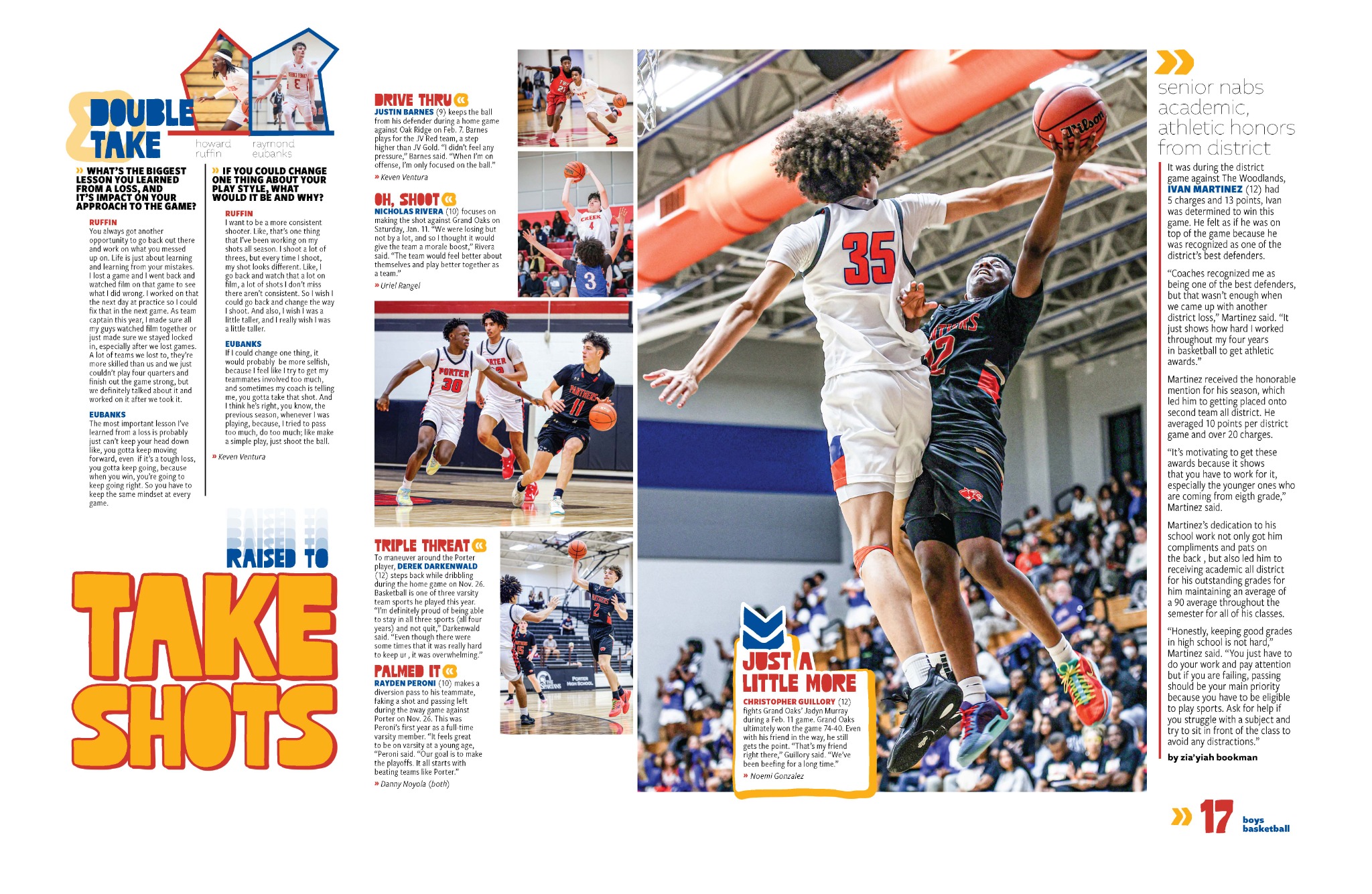
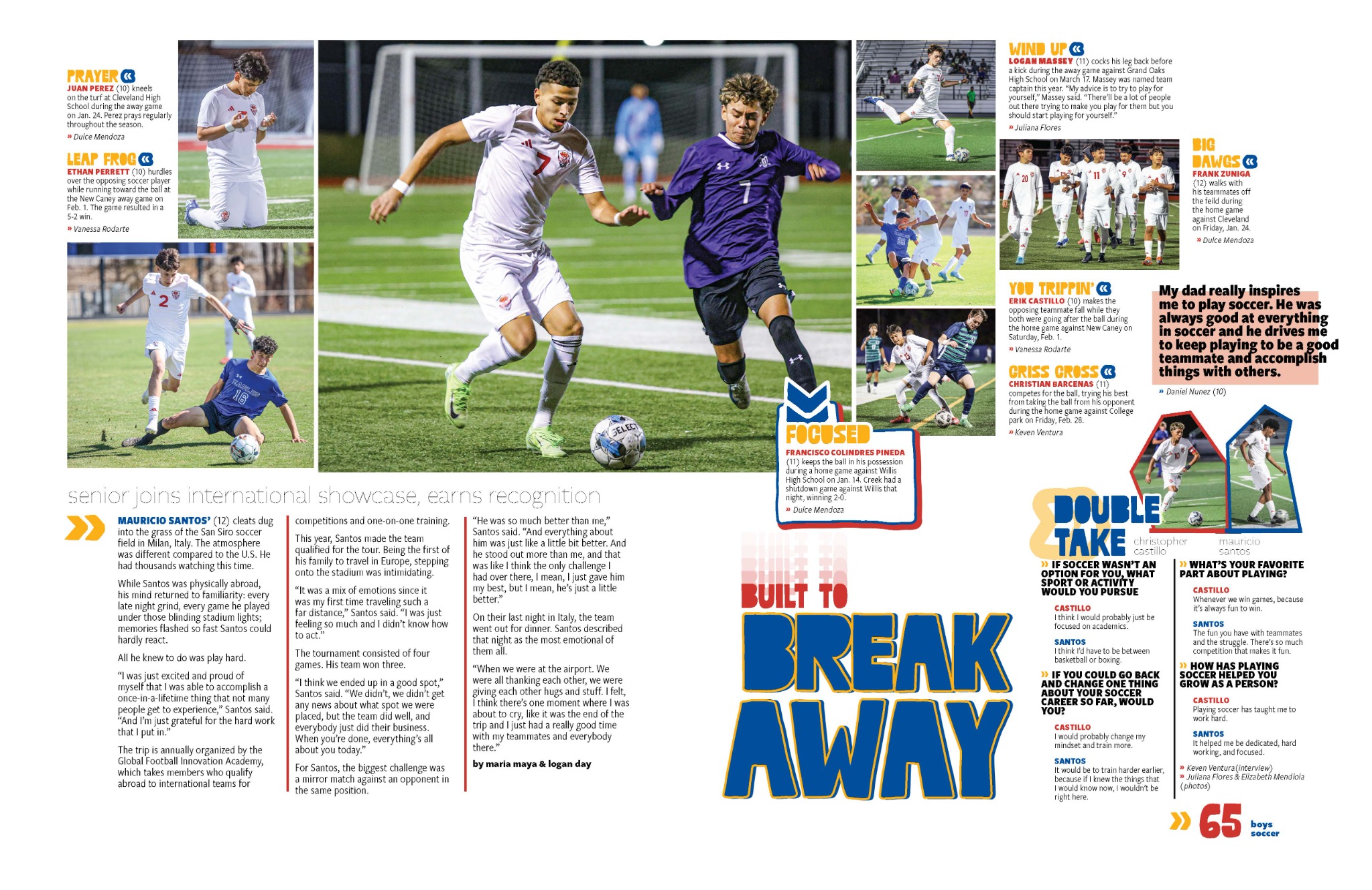
Only then do we create mood boards to brainstorm design ideas, create style sheets and create a series of cover designs and layout a menu of secondary modules that will be used throughout the book. The visuals come last to ensure it pushes the story. This part is the most rigorous since we are generally working from scratch. In this process I try to utilize the elements of design at every stage.
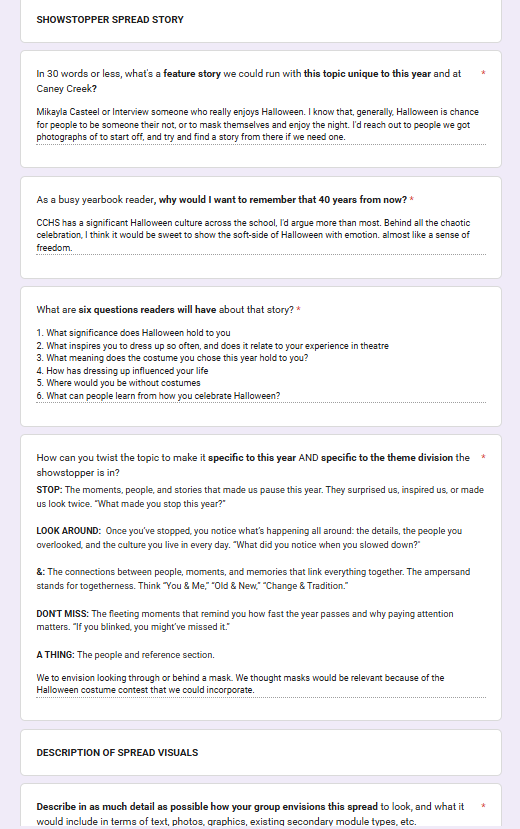
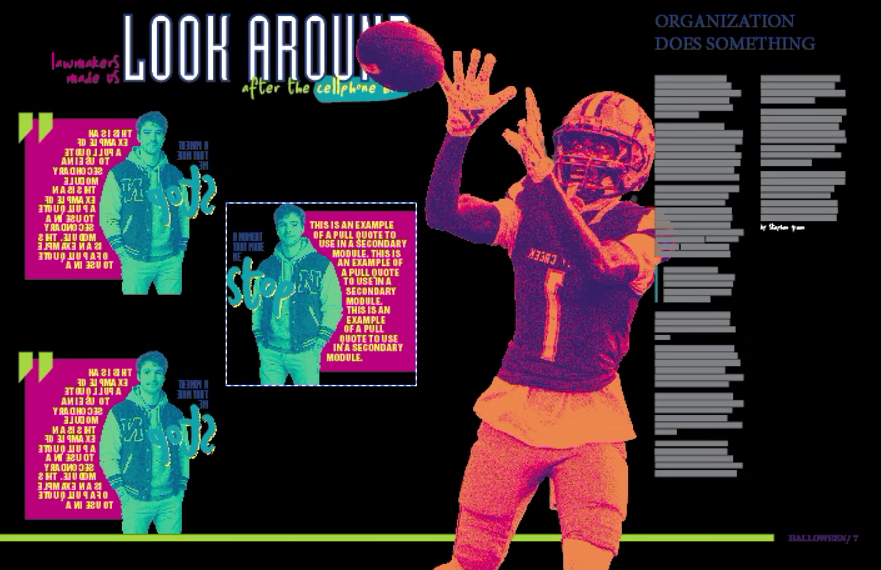
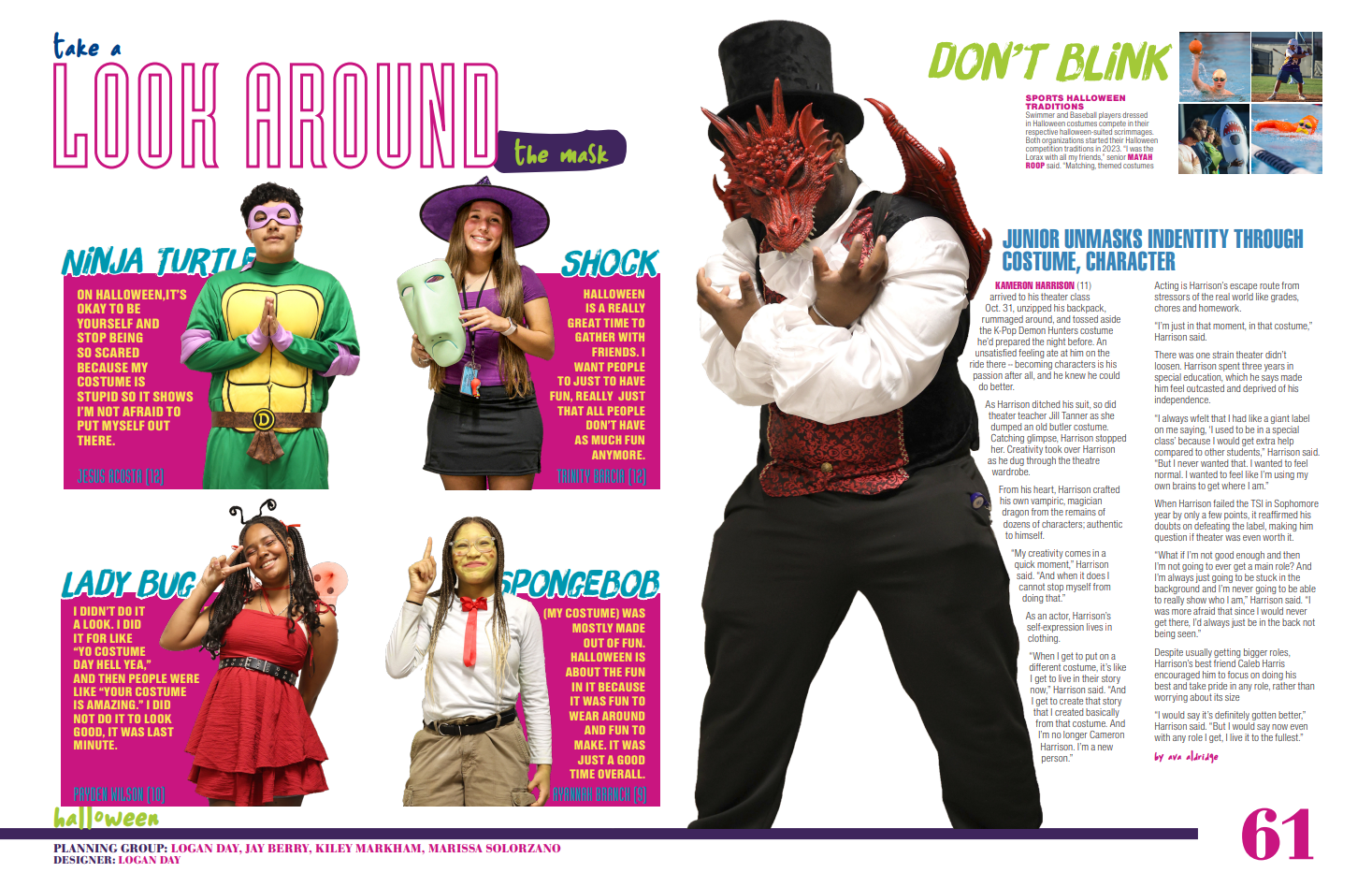
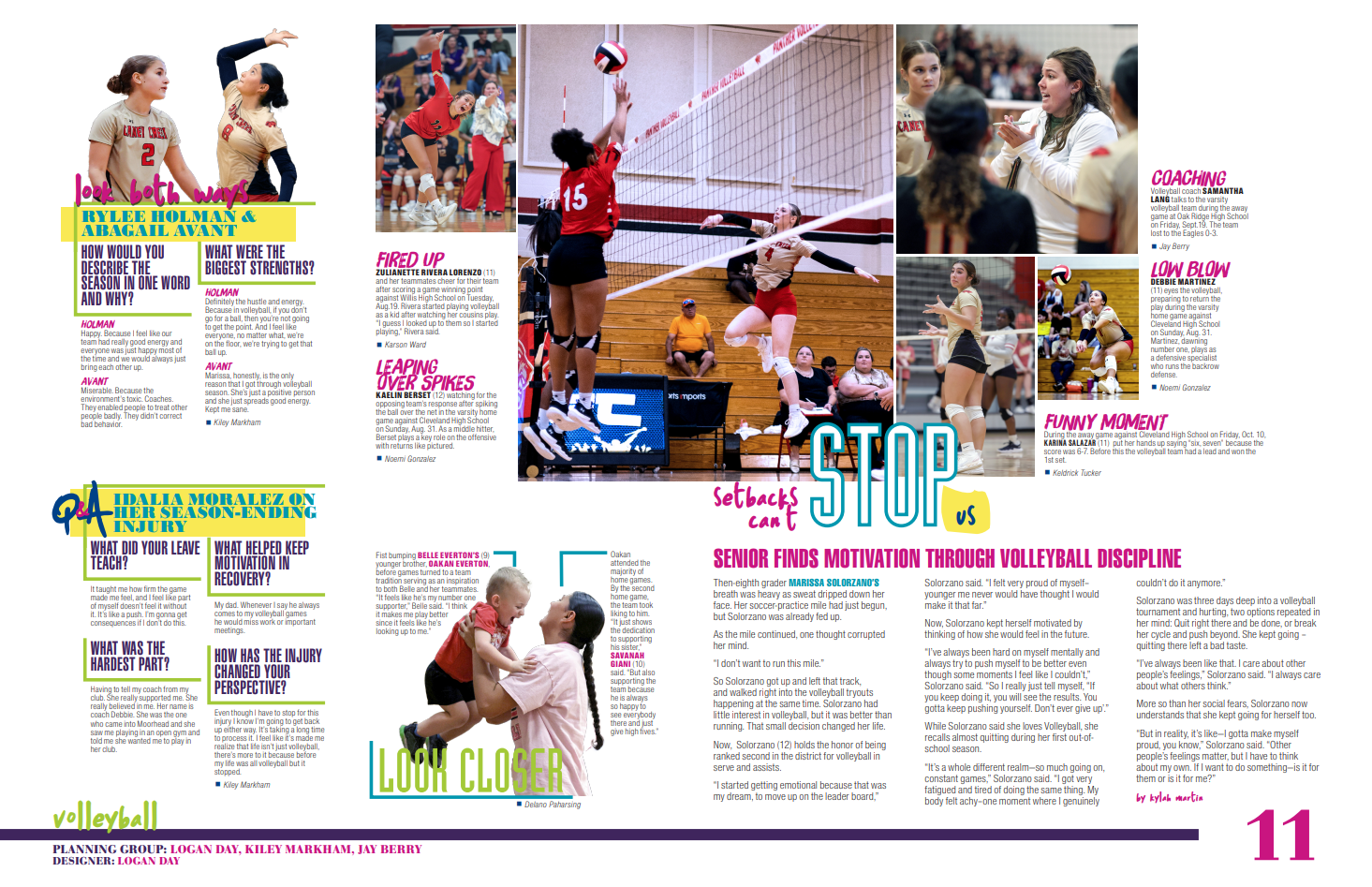
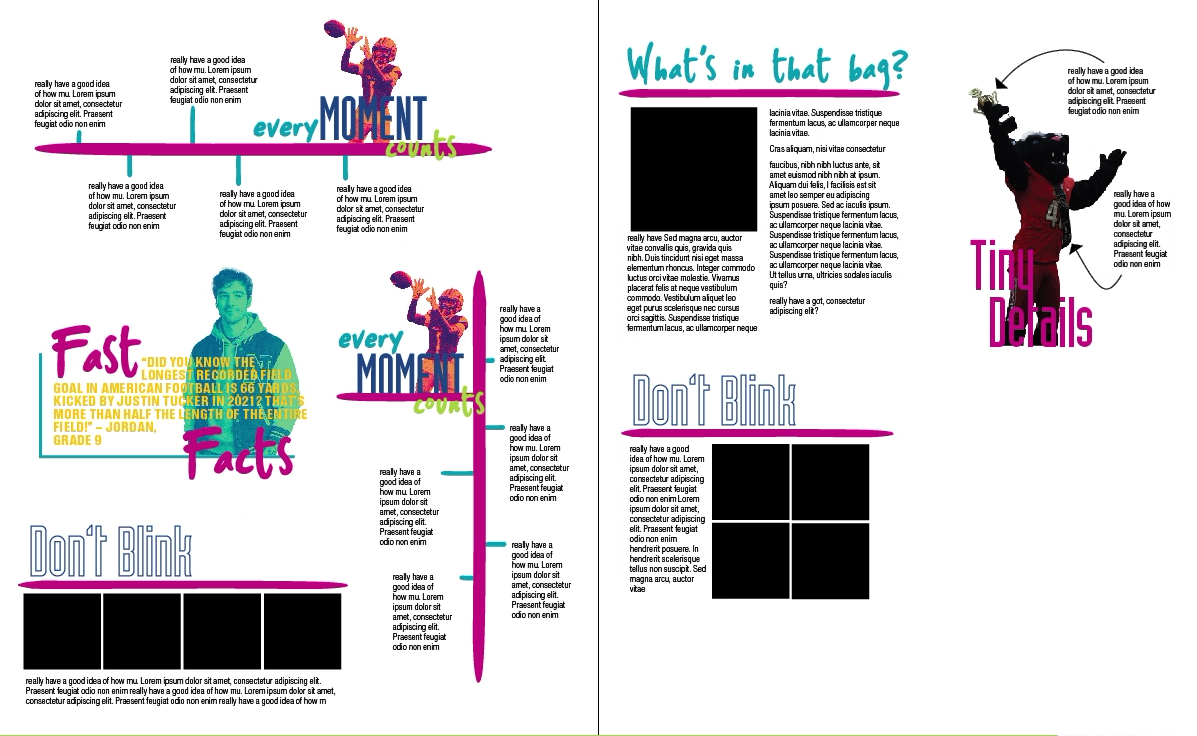
After all modules are complete, I move staff to the “Maestro group” phase, to plan spreads. I crafted a Google Form with my adviser to guide staff to decide what content should be covered for each spread, why we should include it, what modules will be used and what photos will be used. Every piece of coverage has to be meaningful, or it’s sent back. This is repeated until the yearbook editor-in-chiefs and I approve the plan. This image is an example of the Halloween Showstopper I planned.
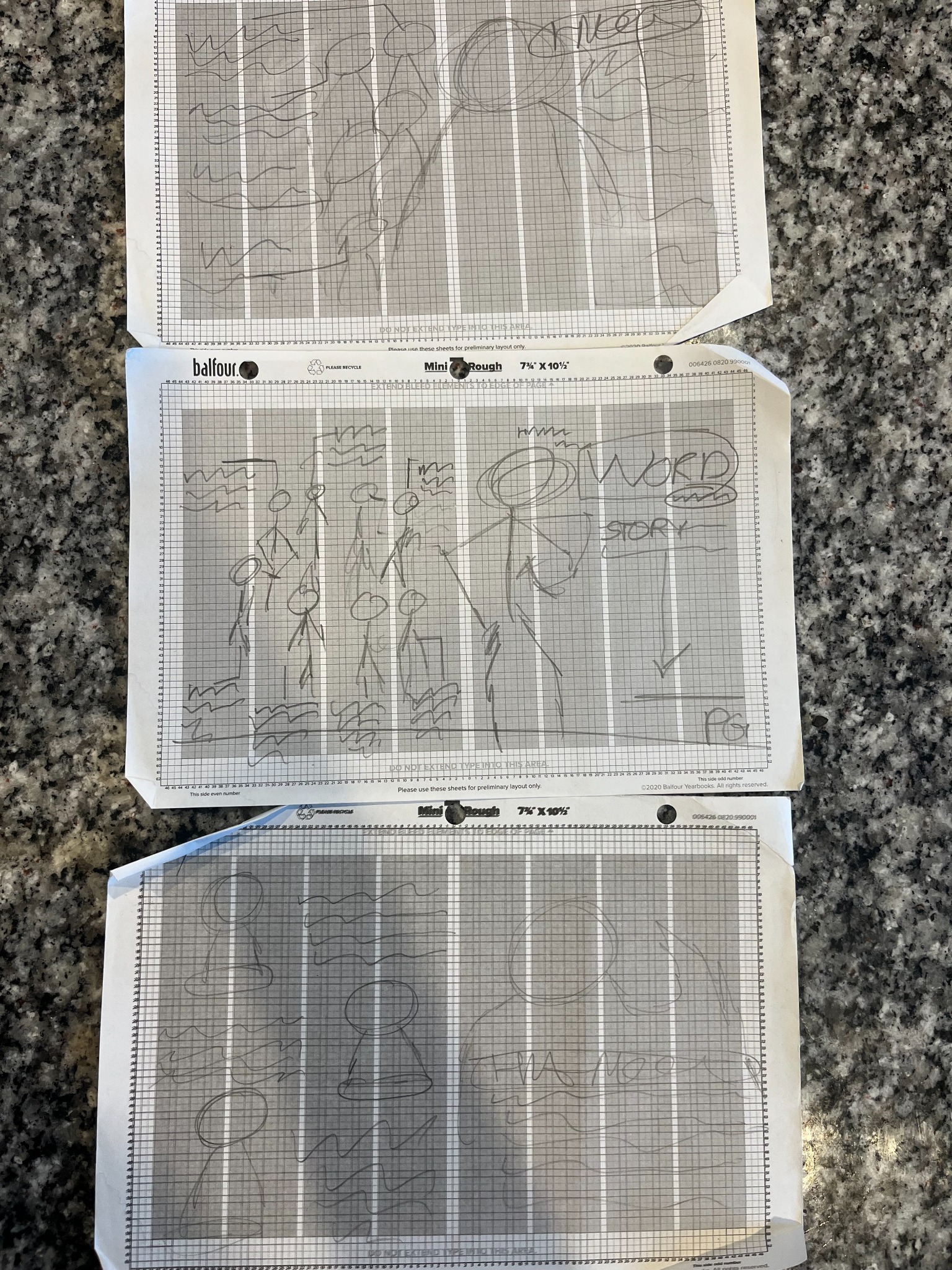
The last step is assigning content for collection, and once completed, designers are finally put to work on the spread. For showstopper spreads, I require designers to sketch their idea first to have them physically draw in elements of design. When a designer completes their spread, yearbook editors and I give feedback and eventually approve. These were my initial concepts for the Halloween page.
To see my process for editing spreads, visit the Leadership Page.

Working on the yearbook in summer, 2025, my adviser, website editor-in-chief and I were the staff members to show up. I was completely uneducated in designing, but that would change whether I liked it or not. With a staff total of two people, I took on the job.
When I couldn’t access the school, I downloaded the yearbook to my laptop and would work from sunrise to sunset. I doubt any other yearbook designer can say they laid a spread while waiting for their summer swim team race, dressed in a speedo, swim cap and goggles.
Even though I was thrown into the waters, that raw trial-and-error experience set a foundation for the next year.
Recognition: 2026 NSPA Pacemaker finalist; 2026 CSPA Gold Crown; 2025 TAJE 9th best of show, Fall Fiesta
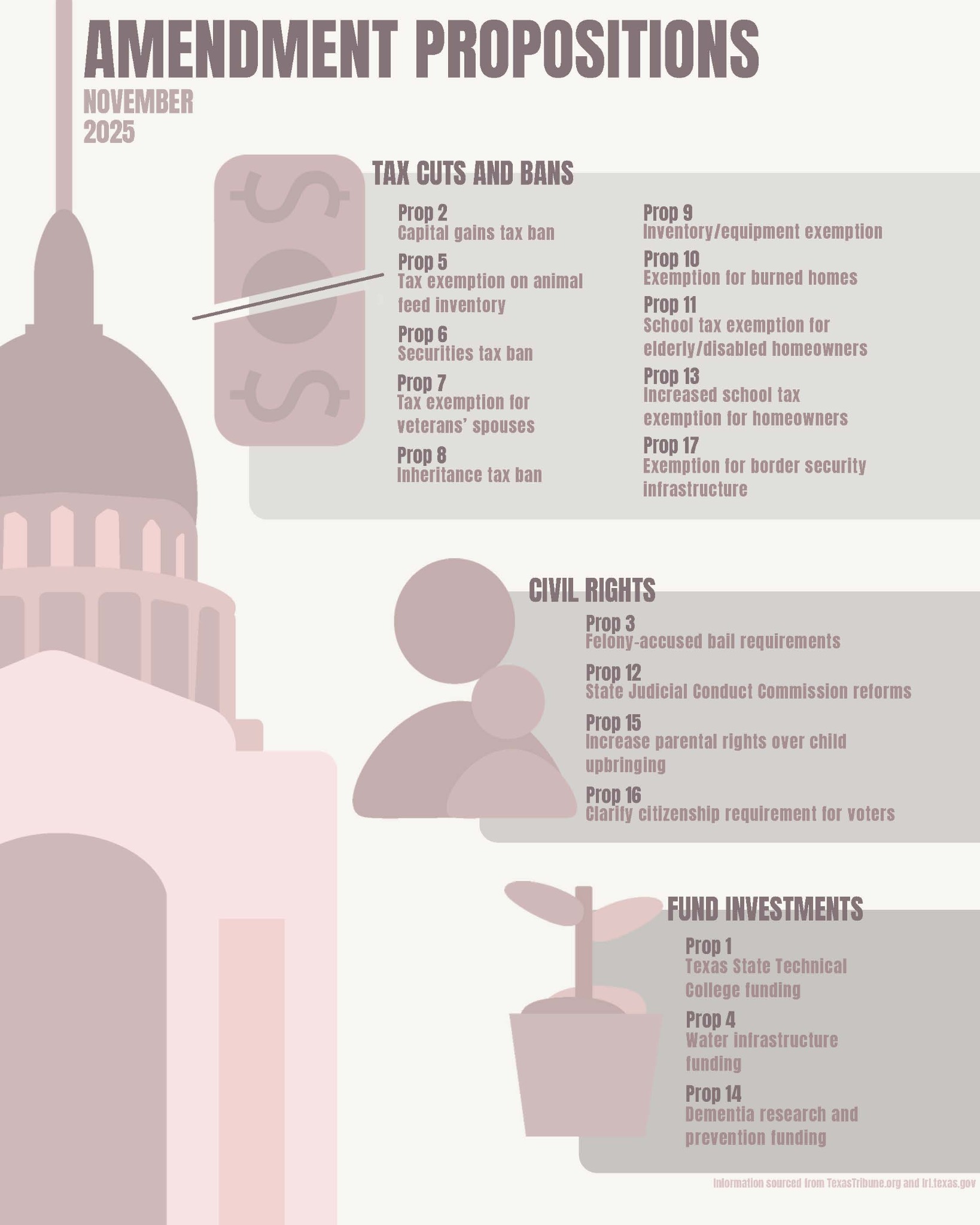
My adviser walked over to my desk and plopped down a book titled, “The Non-Designer’s Design Book.” He said I’d be competing in the infographic design contest at this year’s TAJE Fall Fiesta. "I know design is one of your goals," he said. "This is a great book that breaks the basic rules down simply. This contest will force you to do good work and do it fast."
My heart went to my toes – the convention was a week away and I had to complete it before then, so that book became my best friend; I stuffed my face in it every single class, bus ride and afternoon I had. After five days and two mental breakdowns, I finished the infographic that TAJE required be about amendments to the Texas Constitution on the November ballot. How was I supposed to condense 17 ballot measures meaningfully onto one graphic? The language was so important, but it forced me to edit, edit and edit again.
Before I even submitted, I thought it was over. Imagine my face when I heard my name getting an honorable mention. While I hoped for a higher award, that competition helped me not only learn the principles of design, but it also taught me about how to think about the best ways to visualize complex data for our readers.
Recognition: 2025 TAJE honorable mention, Fall Fiesta
Ironically, I was studying Adobe Illustrator when the school PA system announced a hold — class continued, but students had to enter and remain inside classrooms.
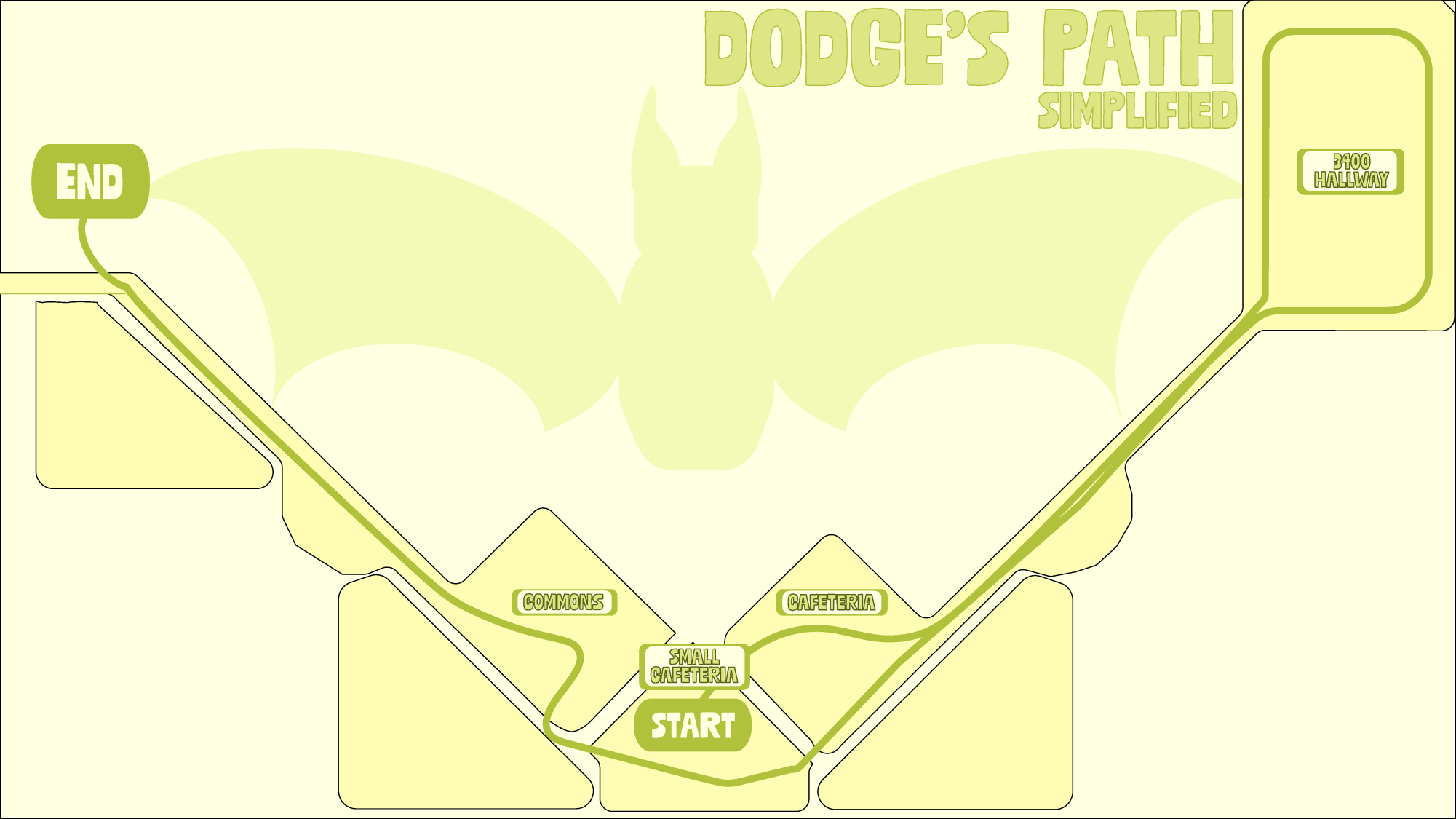
The school threat was a wild bat swooping on campus.
Obviously my journalist bell rang, and I got to work on the story, which led to design inspiration later that day. When admins lifted the hold, I began my descent into interviewing. Twisting and turning through sources, their story painted the bat's picture.
I mapped the complicated story the sources explained about the bat's path to make it make more sense to viewers. Learning the twists and turns of Adobe illustrator felt as wild as that bat, but I'll always take on a challenge to help readers out.
All the pieces finally started to fall in place, both on the page and in my mind. After almost a year of studying, and more often, struggling with designing, I finally felt like I got a grip with the 2025-2026 yearbook.
In between dozens of interviews, copy editing and managing, designing spreads became a sort of vacation. I like to think of it like a puzzle game, unique ways to present information.
Luckily, I love puzzles. Over Christmas break I finalized my designs with my staff. It was a much-needed environment change from the previous yearbook.
While we've yet to snag that website Pacemaker, the journey there has been a battle and taught me so much about online publications, including designing.
In 2025 at the TAJE Fall Fiesta convention, we requested a website critique, and I saw our website through a judge’s eyes. One of Dave Winter's biggest complaints was design, so that weekend I got to work planning out fixes.
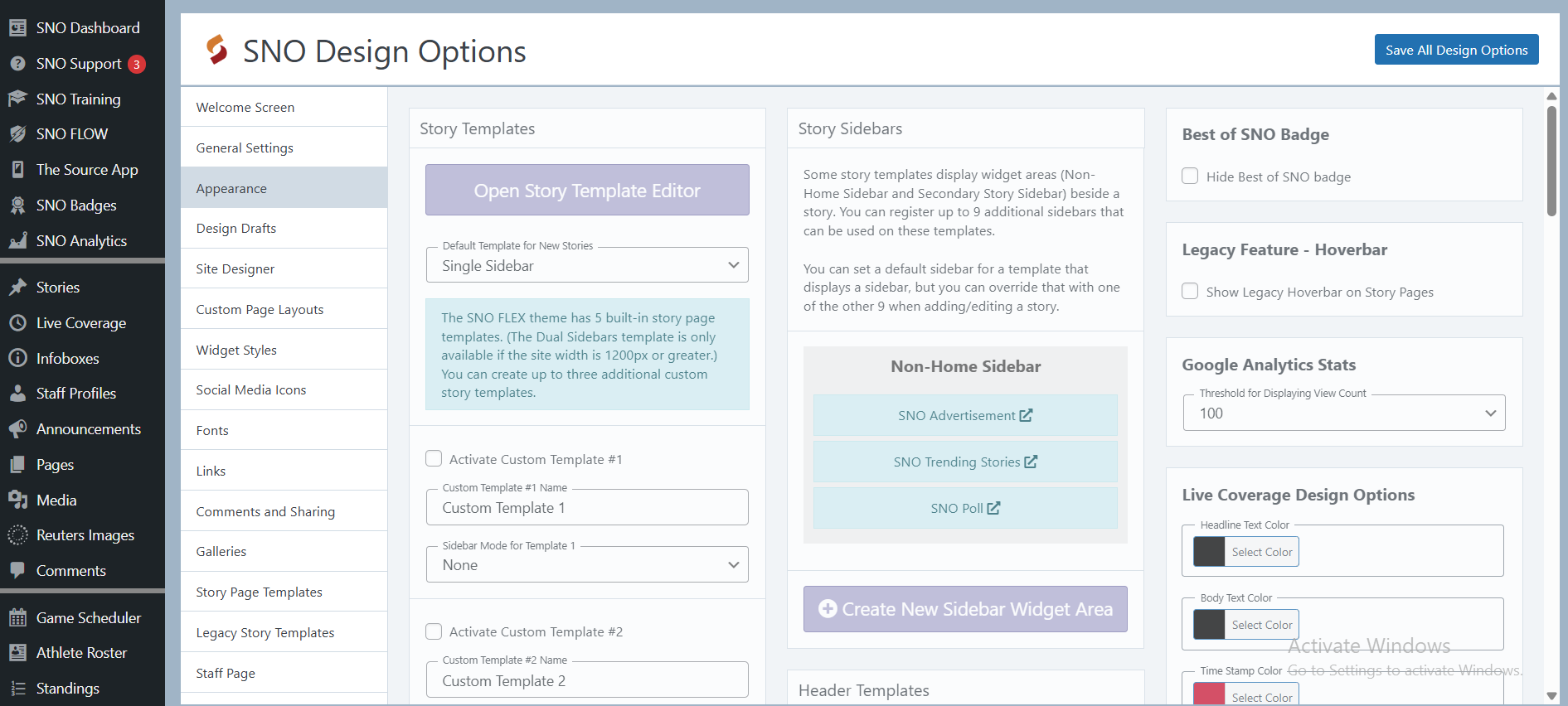
Because I tackled this before returning to school, most of the technical parts of web design were self-taught. SNO can be intuitive, but I also got help from other schools during the journalism convention, learning how to use SNO developer tools.
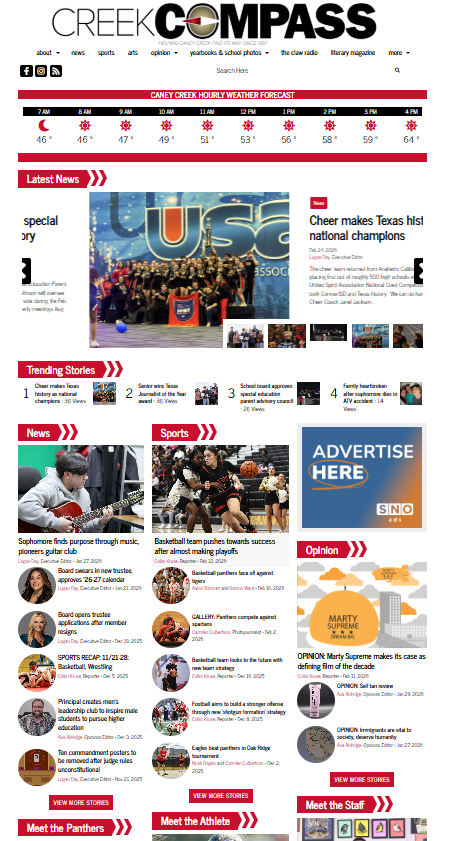
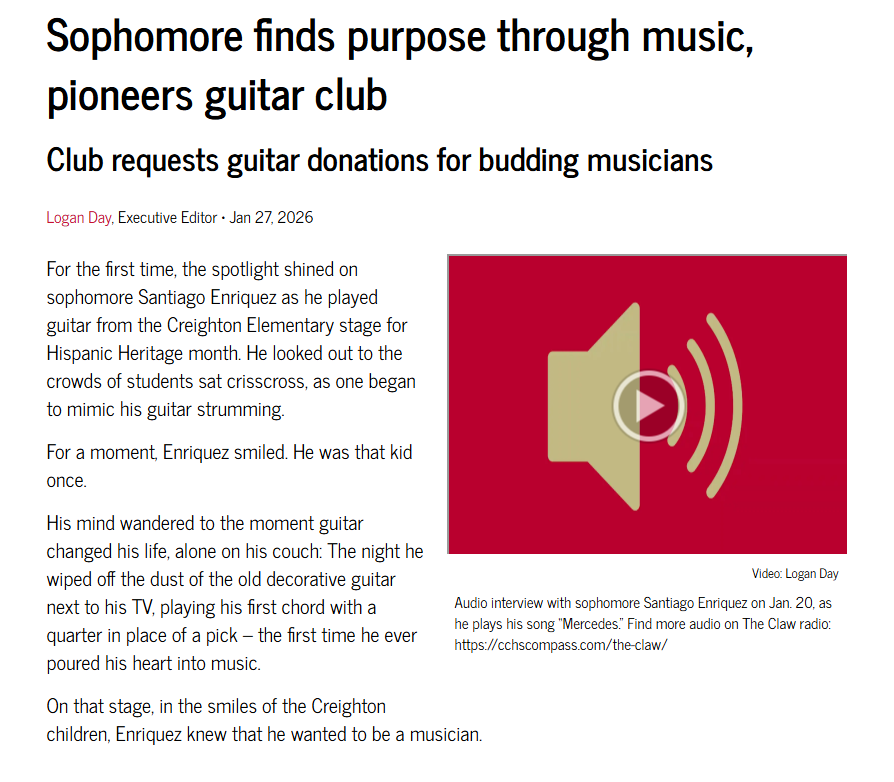
Following Winter's critique I reshaped both our story pages and home page to make the page less heavy and incorporate more web-specific elements to break the story into bite-sized pieces.
Recognition: 2026 Crown Recipient, CSPA; 2025 Silver Crown, CSPA; 2025 Gold Star Award, ILPC
Social media is a hot topic in journalism.
I say it's the modern journalism-medium, so newsrooms must adapt. I created reusable templates to publish our stories in a social media format. Starting summer 2025, I spent months developing and refining the social media formatting and designs. Inspiration rooted from local publications like the Montgomery County Courier, Houston Chronicle and others like the New York Times.
When I promoted the social media editor position to an “in-chief” role, we revisited the post templates and jointly created the designs we use today. To make something new, you have to make it exist first.